


PROMONTORIO, F.A. – DEKA 28, 126 PM
The waves crash against the jagged rocks at the foot of the Becerra Bluffs, sending spits of white, foamy seawater skyward. Around one-hundred feet above the rocks and churning seas, benches offer their occupants picturesque views of the brilliant azure Bay of Crabs before them. The sun warms their faces, many of them chilled by either their age or their chronic illness, and the rhythmic ebb and flow of the waves calm their nerves, forever damaged not by pathogens or genetics but by human events that occurred long before they were even born.
Behind them stands a beautiful, two-story, century old terracotta-shaded structure topped with a red-tiled roof. The open, weather-worn, parota shutters that frame nearly every window lightly tap against the walls in the calm sea breeze. Due to the temperate, pleasant climate of the region, the windows they rarely guard are rarely ever closed. Men and women loll about the yard between the building and the cliffside, walking down the weedy footpaths, playing cards at tables shaded by the odd acacia tree, or simply basking in the warmth of the Ferrian sun.
The Natalia Paula Iparaguirre Rest Home is the last of its kind. Three-quarters of the building is empty; only three dozen residents remain, and after they expire, the home will be shut down and repurposed for some other use. The youngest of the facility’s forty-one remaining residents is 94, and given these individuals’ past careers, the fact that they made it to this age defies the expectations of even the most optimistic actuarial tables.
All of the inhabitants of the ipa, as the residents, staff, and locals call it, are retired members of the Federal Decontamination Service. Though both men and women form their ranks – in fact, the majority of the ipa’s remaining residents are women – they are popularly referred to as the “decon men.”
In the years immediately following the War decontamination was an urgent, if not highly prioritized, need throughout what is now Uniguita. Thousands of nuclear weapons with yields totaling hundreds of megatons of explosive force had detonated across the western half of the continent, spreading radioactive fallout across countless cities, towns, and villages, not to mention fields, pastures, and bodies of water.
In addition to radioactive fallout, the War had damaged countless electric plants, manufacturing facilities, and disposal sites, causing massive contamination by industrial waste in many metropolitan areas. Early Nova Espero settler John Rollins told the scavengers under his command that, “it won’t be the uranium, plutonium, or polonium that’ll get you – it’ll be the untreated sewage, leaking fuel, and the ammonia.”
Regardless of the source of the pollution, very few places in modern Uniguita had the capacity to effectively engage in decontamination in the immediate post-War years. For the scattered groups of survivors across the severely wounded Hegelio-Ferrian Empire, finding bread to eat was of the utmost priority, not necessarily verifying that it wasn’t contaminated with radiation.
Even so, some tried to address the issue. The Kingdom of Hegelion was the first, using conscripted refugee labor to clear radioactive crops and turn over irradiated soil in the region’s farmland in the months following the War. Spurred by paranoia over the effects of acute radiation poisoning, the efforts ultimately resulted in a famine that killed millions of additional people. Later analyses revealed that, while the radioactive fallout likely would have negative health effects down the line, the more immediate food shortages, unrest, and disorder were far more deadly.
Elsewhere, few attempts were made to address radiation. In the Fertile Center, where urban nuclear attacks had been comparatively few, massive attacks occurred at missile fields located in the region’s western foothills. Due to the prevailing winds, fallout from these attacks blew eastward, contaminating tens of millions of acres of vital wheat and corn fields. Many places throughout the Fertile Center simply ignored it, believing that the fallout had been so dispersed that its risk was minimal. In the region’s wheat belts, where the summer crop had been harvested months prior, the common sentiment was that subsequent rains would clean out the fields, making them usable in due time. This was not the case, and instead the radioactive strontium and cesium isotopes quickly leached into the soil and groundwater. Illnesses related to radiation poisoning remained elevated throughout the Fertile Center well into the 50s, when farmland and pastures heavily contaminated with fallout were closed for agricultural use.
As time passed and Uniguita formed, built institutional capacity, and conducted thorough research on radioactive and nonradioactive contamination brought about by the War, a push for long-term, comprehensive decontamination grew. In 9 PM, the Common Council formed the Federal Office for Decontamination and Environmental Remediation. Two years later, it was reorganized as the Federal Decontamination Service.
Surviving waste disposal professionals were actively recruited to lead the effort, and following the end of the war between Uniguita and Hegelion in 15, those conscripted into the federal service were given the option between serving in the Federal Army and joining the FDS. President Lionel Valdes (16 - 19 PM) called the Army and the FDS, “the only two forces capable of taking on our generation’s two twin ails – despoilment and imperialism.”
Future President Giovanni Cheffra briefly served as a “decon man” – so named due to an early prohibition on the service of women – in the late 10s. “I figured it would be safer than fighting backcountry bandits,” he later told a biographer. “Plus, they offered a N101 weekly hazard bonus. What broke kid would turn that down?”
During the Valdes era, agricultural decontamination was prioritized. Agents of the FDS tested soil, crops, and water sources throughout the Federation for radiological contaminants, and the decon men used anything from bulldozers to tractors to even spades to either turn over or outright remove soil that was deemed to be contaminated. Particularly contaminated so-called “hotspots” saw their inhabitants removed (by force if necessary) and the lands excluded from human habitation. Some of these places were eventually reinhabited while others were converted into conservation areas, including Borden National Park in North Hegelion, Kilkenny National Park in Kilmartin, and Tierra de los Mil Brazos National Park in West Ferria.
Decontamination was also used to achieve political ends. While Hegelion remained an unincorporated territory of Uniguita prior to 21 PM, the FDS declared otherwise healthy land as being contaminated so that it could more easily be confiscated and converted into collectivized agricultural uses. Reporting from the Universalo in 19 PM revealed that the scheme had not only led to the waste of FDS resources, but also to continued famine in Hegelion as a result of the inefficiencies of the collectivization program. That the Valdes government was claiming the collectivization program had been successful, that there was no famine in Hegelion, and that the collectivization program should in fact be expanded to the rest of Uniguita proved a major embarrassment to the government and ultimately led to its collapse in 19 PM. Tarnished by association with the scandal, the FDS faced increased scrutiny.
In addition to its part in the failed collectivization scheme, the FDS faced increasing criticism over its single-minded focus on radiation. Though federal and independent researchers had repeatedly told the FDS that non-radioactive industrial and sanitary waste should be the primary focus on decontamination, radiation was far more politically salient. Josí Ferraro, Valdes’ chief of the FDS, allegedly told one of his deputies that, “the slums were polluted before and they’re polluted now. Who gives a shit?”
After Valdes left office in 19 PM, crises that otherwise would have been tightly controlled exploded onto the front pages. A week after Valdes’ departure, leaked documents revealed that FDS staff knew that the groundwater of the recently resettled city of Port Hickham was severely polluted with ammonia, lead, cadmium, chromium, and “a number of highly noxious and hazardous petroleum byproducts.” News outlets began openly reporting on regular fires and disease outbreaks caused by the countless chemicals released by the War’s damage. They also began uncovering instances of nepotism and political cronyism endemic throughout the FDS, with Valdes’ friends and family, as well as unqualified members of his wing of the Communalist Party being given important positions within the organization.
To learn more about political cronyism in the federal civil service, read the following article about the Federal Courier and Communications Service.

After the 20 PM elections, a coalition led by Viktoria Kaplo, whose reformist wing secured control of the Communalist Party after Valdes’ departure, and supported by the Liberals, promised reform of the federal government and the FDS in particular. Political lackeys were sacked in favor of qualified professionals, and one of the few qualified officials in the Valdes-era FDS was made its chief administrator. Antonio Dioguardi, who had worked as a wastewater remediation manager before the War, had floated around various settlements following the War prior to joining the FDS in 11 PM. He worked his way up the ladder, eventually securing a position as a section head in 16 PM, just before Valdes became president. He languished in middle management for the next several years before being tapped for the top job just days after Kaplo’s inauguration.
Dioguardi shifted the FDS’ efforts towards urban decontamination and called for tens of thousands more workers to aid in the effort. In testimony before the Common Council, Dioguardi called urban decontamination “among the most monumental undertakings in human history, second only to the general reconstruction.” Meanwhile, the first research on the long-term health consequences of decontamination work was being conducted and released. “Cancer and disorders of the nervous system are significantly elevated among decontamination personnel,” read one study from the University of Nova Espero. Another estimated the life expectancy for front-line decontamination personnel – especially those deployed for industrial cleanup – was just 47 years, compared to 65 for the general population.
In response to the ongoing contamination crisis and these studies, Kaplo’s administration crafted the Decontamination Administration Act in 21 PM. The act would not only overhaul the FDS administratively, but also dedicate more funding towards personal protective equipment, officially re-orient the agency towards industrial decontamination, and end the ban on women in service. It also guaranteed lifelong advanced, untriaged medical care to FDS frontline workers who had served in that capacity for more than one year, and comfortable accommodations for FDS employees upon their retirement.
Like many Kaplo-era programs, the DAA was generous, broad, and wildly expensive. While the bill helped dramatically increase enrollment in the FDS, tens of thousands of frontline workers who had previously served were now seeking access to benefits. The statute was written in such a way that 26-year-olds who had been in the FDS for two years were now able to live their lives in comparative luxury at newly-built rest homes. Throughout the 20s, dozens of these rest homes were built throughout the country, featuring amenities like saunas and swimming pools. Due to the stigma surrounding radiation and irradiated individuals, these homes were typically built in secluded environments that were also host to hiking trails, scenic vistas, and air far fresher than in the polluted, still war-torn urban centers. Built at the peak of this building boom in 25 PM, Iparaguirre Rest Home offered a quiet refuge for up to three-hundred retirees as well as specialized cancer treatment facilities.
By the end of the Kaplo administration, the costs of the DAA (and her administration’s other programs) had chewed away at the government’s dwindling gold reserves. In order to continue funding her government’s generous social spending, the Federal Credit Union began printing more notes which triggered an inflation crisis in the late 20s. In response, the electorate threw out the Communalists in favor of the more austere Liberals. President-elect Karlo Plagad promised to “economize the Federation,” and bring federal spending to heel.
In 30 PM, his administration restricted DAA benefits to only those who had 1) served in “particularly hazardous roles” while serving in the FDS, and 2) had either reached the age of 45 or faced disability or severe illness as a result of their duties. This dramatically cut the number of rest home inhabitants from a peak of more than 30,000 in 29 PM to less than 8,000 five years later. Most of the federal rest homes, many of them less than a decade old and sumptuously accommodated, were sold off to hoteliers to serve an upper middle class that grew under the Liberals’ policies.
At the same time, Plagad continued the FDS’ pollution remediation work, though with fewer resources and increased outsourcing to growing private enterprises. One of ipa’s most famous residents was Carl ter Voord, who served in the FDS from 31 to 34 and whose best-selling book on his experiences in the FDS The Canaries described the dangers of Plagad-era decontamination.
“When the mill workers abandoned the small paper milling village of Moresby amid famine and the onslaught of rogue warlords, every conceivable chemical concoction bled into the ground and the atmosphere from blasted tanks and poorly contained waste disposal sites. While fallout flew, dioxins dug deep into the soil and required endless weeks of grueling work with shovels and backhoes to remove. The slipshod gloves and overalls they gave us rotted as we worked, and the day’s end revealed our boots to be filled with sludge peppered with mercury, zinc, nickel, and lead. The smells of ammonia and bleach scarred our mouths and lungs, with the cloth masks – much more inexpensive than the properly filtered ones, you see – providing little protection. The foremen told us to ignore the pervasive stench of chemicals and rot, and gladly informed us that the flushing of our skin and our unceasing coughs were just the expected byproducts of the work at hand.”
Ter Voord entered Iparaguirre at the age of 29 in 37 PM as a result of a severe nervous system disorder that gave him frequent seizures and twice put him in a coma. He would die a few short years later at the age of 31, just months after The Canaries went to print.
Despite the continued need for environmental remediation, President Enrico Carmelo announced a wind-down of the FDS’ work beginning in 46 PM. In a triumphant speech to the Common Council, he said, “the war of yesterday is over – let us move on to more pressing issues, and greater threats.” Meanwhile, Carmelo’s first FDS administrator Henrietta Afonso had said in 41 PM that cleanup would take “a century or more, optimistically.” It didn’t matter to Carmelo, however. He dismissed Afonso and re-dedicated much of the dwindling FDS’ budget towards fighting perceived threats of organized crime, exaggerated reports of which he later used as a pretext for his attempted coup in 47 PM.
Even after Carmelo’s downfall, however, the appetite for continued decontamination had waned. The FDS’ work was confined to limited operations addressing smaller, contained sites of particularly acute need. After President Erika Lankolay took office in 48 PM, the FDS briefly saw a surge in funding for improved protective equipment and remediation machinery, likely expanding the lifespan of decon men by decades.
Nevertheless, the appetite for broad-scale decontamination had largely dissipated. In 51 PM, the Lankolay Administration quietly shuttered the FDS, shifting decontamination work to smaller operations within the Federal Radiological Institute and the Department of Environmental Quality (DEQ). In retrospect, the end of the FDS was as premature as Henrietta Afonso had feared. Acute pollution incidents, such as the radiological poisoning in Término, continued to affect the country, as did chronic ones. As Lankolay’s administration worked to further build out the nation’s infrastructure, workers digging out ruts for subways, sewers, and utility lines were continuously exposed to the hazards buried by decades of neglect and the forgotten aftermath of the War. In a 120 PM study, scientists from the DEQ and the University of Nova Espero estimated that the cumulative effects of unaddressed pollutants brought about by the War have shaved two years off the Uniguitan life expectancy.
Though cases like those of Carl ter Voord weren’t especially uncommon, they weren’t the norm either. Most of those who received critical exposure to toxins radiological or otherwise experienced health issues later in life than the young author. Decon men, many of whom were in their young adulthood when decontamination work peaked in the 20s and 30s began to experience early onset disabilities in the 40s and 50s. As the number of Federal Decontamination Service employees drew down in the late 40s, the number of rest home entrants rose sharply. In 40 PM, there were a little over 8,000 rest home residents nationwide. Ten years later, that number had increased to more than 45,000. Shuttered rest homes that had gone unsold were reopened. By the mid 50s – when the median former FDS worker was in their 40s – more than 80,000 decon men had developed illnesses or disabilities severe enough to guarantee them access.
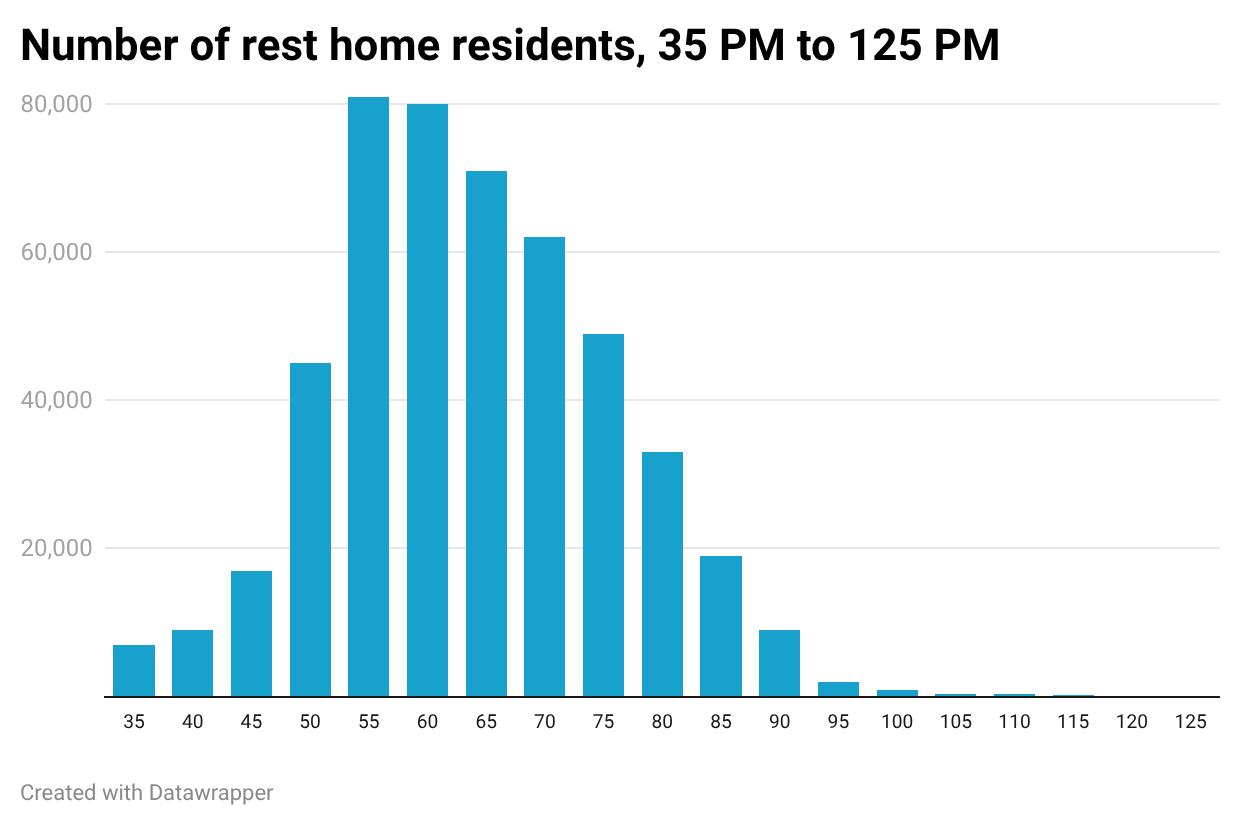
Dr. Ramsay Portenoy, the chief medical officer within the quickly expanding Decontamination Worker Health Administration (DWHA) explained his assessment of the wave of new entrants before a Common Council committee in 56 PM.
“These are men and women in early middle age who should be guiding their children through early adulthood, but are instead struck down by advanced, degenerative illnesses. These people have been rendered invalid by a truly astounding number of cancers, sicknesses of the mind, ulcerative illnesses, and renal diseases not seen in patients twenty years their senior. These people have been thoroughly and irrevocably poisoned as a result of their oftentimes brief work in their service of post-War cleanup.”
While the primary focus of outsiders was, again, on radiological exposure, Portenoy estimated that some 80% of rest home residents had never even encountered radiation.
“These people were in many cases, not put in their current state by glowing particles,” he said. “They were more often than not immobilized by burning methane and coal ash.”
As degenerative disease and cancer tore through former FDS workers, their weakened immune systems left them especially vulnerable to infectious disease. Frequent outbreaks of influenza and tuberculosis left thousands of rest home residents dead or permanently weakened. Rest homes served as metaphors for the lingering effects of the War in poetry, literature, and film. Director Tom McCaulin’s Always Dreaming (69 PM) portrays the life of a young man who volunteers for the FDS in the 30s in the hopes of putting the horrors of the War and the damage it wrought behind him and his country. After his service, he discovers that he was exposed to chemicals that can lead to early onset dementia. He soon enters a rest home, where he slowly begins to forget his early life and the hopes for his future that had been snatched away by his illness.
By 100 PM, disease and age had taken the lives of the vast majority of the rest homes’ residents. Of the nearly 250 homes that had been open in 70 PM, only ten remained by 100 PM. Today, only Iparaguirre remains. Those who reside here now were all FDS employees during its waning years, when the hazards were less acute and protection more advanced and plentiful.
Before I leave the ipa, I meet the 98-year-old Ren Armitage for a game of pinochle at one of the home’s many vacant outdoor tables. Armitage joined the FDS in 46 PM at the age of 18, and was sent to help clean out an abandoned coking plant in Zoldhegyek’s steel belt. She spent six months cleaning out tar sludge and coke ash from the plant before being transferred to the dismemberment of an abandoned wastewater treatment facility near Port Williams.
Two weeks ago, Armitage was diagnosed with advanced lung cancer which her doctor ascribes more to her pack-a-day smoking habit rather than her previous decon work. But Armitage still bears scars from her work – like Carl ter Voord, she has suffered for years from neurological illness and seizures, and has watched countless friends waste away at places like the ipa for decades. And because of dioxin exposure, Armitage was rendered infertile. She and her husband Lawrence, who passed away last fall, never had children.
“I’m all that I have left, really,” she tells me, sadly. Looking up from the cards, her graying eyes peer over the grassy lawn leading to the ocean. Over the cliff’s edge, I can still hear the waves ceaselessly slamming against the promontory wall.
“I know a lot of people like that,” she says, before going back to the cards.
[OOC: Around $200 US dollars today.]