



ILE DES CHATS, P.N. - NAU 19, 126 PM
On the rocky, fir-covered Ile des Chats off the coast of Pierron in Uniguita’s far north, cats are ever present. When this island was a thriving fishing and fur-processing outpost some two-hundred years ago, cats were released to contain its persistent rodent problem. Today, the fur and fish markets along with their accompanying jobs are gone but the cats still make their rounds of the isle, outnumbering their human neighbors five-to-one. Around one-hundred full-time residents remain, mostly pensioners looking for a calm and cool respite in their waning years.
In a town of such few residents, there are accordingly few amenities. The hamlet at the island’s edge contains just a small grocery store, an elementary school – older students go to the school on the mainland – and a squat house-looking structure. The paint is a dull yellow, chipped and tormented by the famously unfriendly winter weather of this region. The building itself is racked, listing worryingly to the right and its frame creaks under even the subtlest of breezes.
A signboard above the door reads “Service Fédéral de Courrier et de Communication” – Federal Courier and Communications Service.
Twenty miles from the hustle and bustle of the nearest “city” Port Martien (population: 6,801), this lonely frontier fort stands as a symbol of the durability and reach of one of the Federation’s longest-standing institutions. At the same time, the current state of the Ile des Chats post office betrays the FCCS’ vulnerability.
When she first showed up at the gates of Nova Espero in 2 PM, Annabelle Crowley was far from intimidating. Eighteen years old and “built like an eighty-year-old donkey” according to one immigration officer, Crowley was rail-thin and jittery. After her quarantine at the Survivor’s Hospital, she was assigned to scavenger duty. Her colleagues chided her for her comparative weakness, and her superiors initially attempted to transfer her to a different work detail. Soon, however, her fellow scavengers found her worth. Despite not being able to carry heavy loads, her diminutive stature allowed her to more easily navigate narrow passageways, difficult terrain, and ruined buildings. “If there were a crack or crevice more than six inches wide that she couldn’t get through, I never saw it,” said Oscar Talmadge, a fellow member of her unit. They affectionately referred to her as “the Cockroach” and the name stuck.
As the scavenging units sprawled out across the Hegelion peninsula, communication between them became difficult. Crowley, with her proven adeptness for navigating the badlands and her quick feet, was made a messenger. She proved uniquely capable of quickly carrying messages between units, and was eventually pulled from the front lines by Chief Lazaro Libero. He made Crowley the “chief” – read, only – “courier,” responsible for carrying messages from the headquarters in Nova Espero out to the scavengers, and then back again.
Crowley, who found she had a knack not only for delivering messages but also sussing out potential future messengers, gradually built a small clique of couriers. Within a few months, a spiderweb of quickfooted, nimble letter-carriers formed a connective tissue between the settlement and its forward-running scavengers.
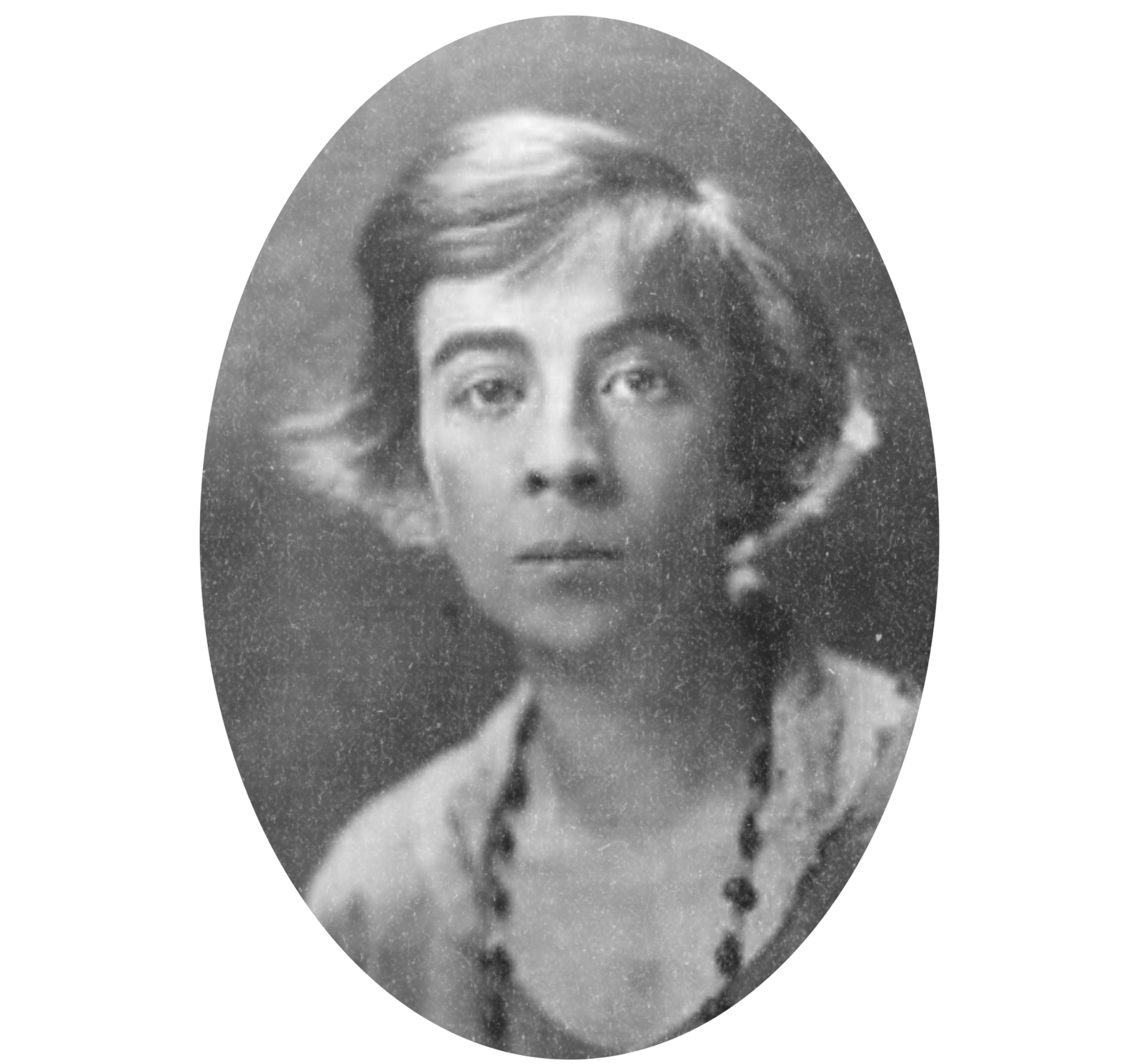
“The Cockroach” also proved adept at ensuring her unit’s evolution and survival. Once field telephones were found and put into use, Crowley made sure that it was her messengers manning both ends of the line. When radios were re-introduced, she again ensured that her field messengers were the operators. When contact was established between Nova Espero and Ferria in early 3 PM, Crowley secured passage on Ferrian trading vessels for her couriers to bring letters, purchasing orders, and newspapers with them.
When the Ferrian Republic and Nova Espero united to form the Federation in 5 PM, she made sure that she – then only twenty-one years old – became the head of the new Federal Courier and Communications Service.
Or at least, co-head. Crowley was horrified to learn that, as a part of the federation agreement, she would have to serve as co-Chief with her Ferrian counterpart, Eduardo Pollock.
“To be perfectly blunt,” she told Chief Libero when he broke the news to her, “the [Ferrian courier service] isn’t worth a bucket of warm shit.” The Ferrian Correos were known to frequently mishandle and lose letters and packages, and were broadly considered to be corrupt. Oswaldo de Garra, an early novo journalist with relatives in Ferria, once said that, “if I send a N20 bill to my cousin, I can expect that somewhere between Uniontown and Puerto Ostra the envelope will somehow be so damaged that only a N5 will show up at his door.” By contrast, due in no small part to Crowley’s “ruthless, totalitarian discipline” as one courier put it, the novos were known to be professional, courteous, and dutiful.
Crowley resented sharing command with Pollock, whose couriers she saw as “lazy, cowardly, and terminally late.” According to Crowley, Pollock very nearly sabotaged the Service’s upward trajectory. “I said ‘let’s get in on telephone wiring’ and he would say ‘no.’ ‘Well let’s get in on radio relays,’ and he would reply ‘that’s not our job, muñeca,’” she told a reporter in a 43 PM interview. “Bastard was always calling me muñeca, like I was a child.” Pollock, a man twenty-two years Crowley’s senior, was often treated as the more responsible party in the Service, despite Pollock’s Correos’ poor performance and Crowley’s proven track record of success.
Crowley ultimately went behind Pollock’s back and managed to get both the nation’s new telephone and radio networks placed under their purview, convincing the Common Council that both of them were in support of the proposal. It wasn’t until 9 PM, after four long years, that Pollock was dismissed for, “disorderly conduct unbecoming a government officer” after a public drunken, profanity-laden rant at a Puerto Ostra bar landed him on the front page of a local tabloid. Allegedly, Crowley offered advantaged postage rates to the editor of the paper in exchange for humiliating Pollock, though both Crowley and the editor strenuously denied the claims. With the initial bi-national compromises of Federation in the past and the Service’s ongoing improvement under Crowley as she successfully portrayed Pollock as a “drunken lout who has been out to lunch on the taxpayers dime for years,” the Common Council saw no need to name a new co-head.
As the Federation continued to take on the Ferrian warlords from 6 - 11 PM, the government saw the FCCS as a valuable tool in ingratiating the Federal Army among liberated residents. In General Order 15 dated Okto 19, 6 PM, Commander-in-Chief of the Federal Army Lionel Valdes mandated that, “in every town consisting of twenty households or more, offices of the Aid Corps and the Courier service shall be established.” The two offices were often contained in the same building, distributing aid and medical care to needy families in one wing, and then offering postal services in the other. Copies of the Survivor Rolls would be housed in the Aid Corps office, giving residents of newly liberated territories the opportunity to look for long-lost relatives in the names of the surviving few. Upon finding the potential name of a loved one, they could then go over to the Couriers’ office and send them a postcard for just a quarter note.
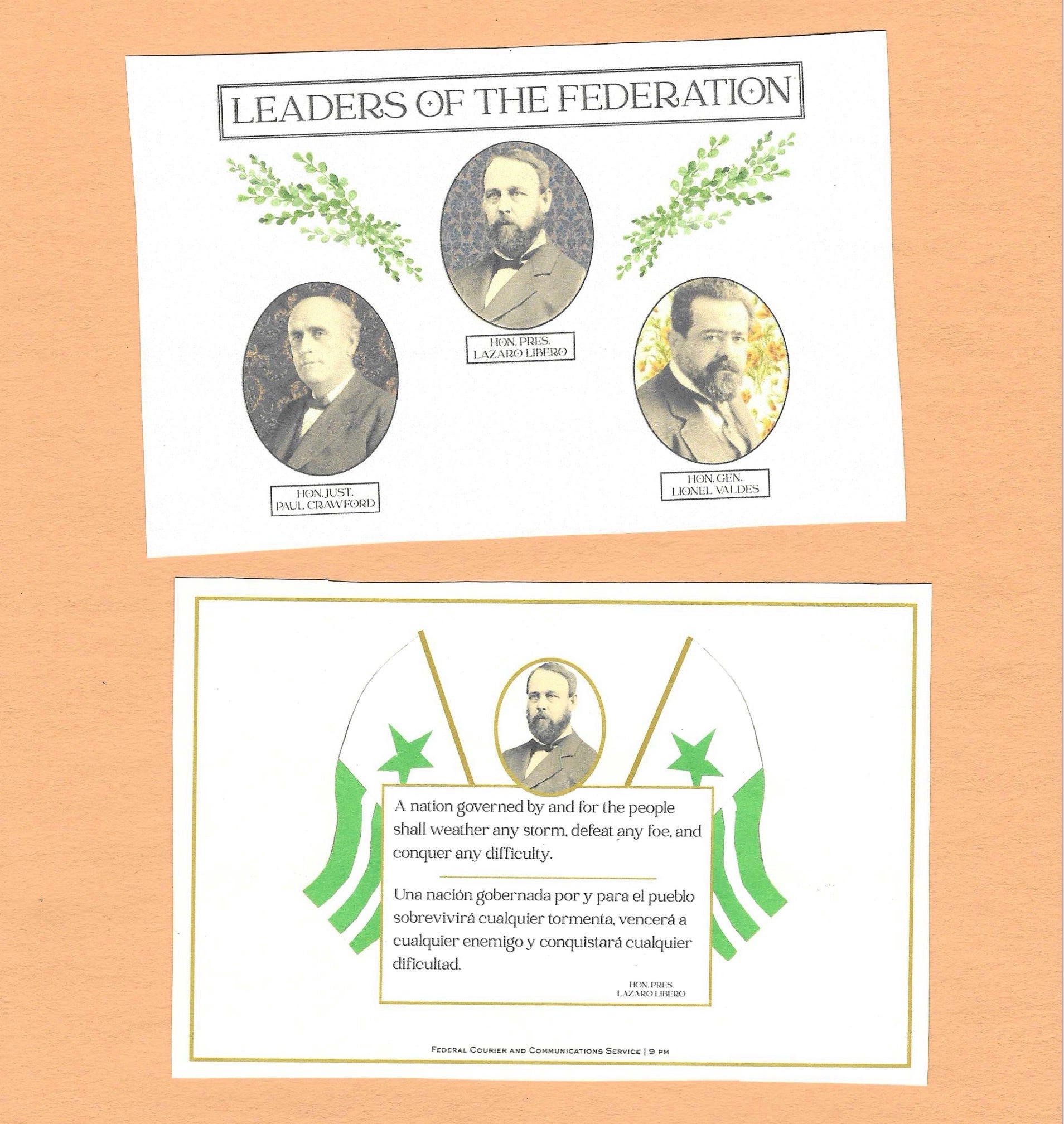
One Deputy Chief Courier, Tomas Daniuelo of Buenaventura in modern-day East Ferria, noted the influx of local residents whenever the newest edition of the Survivor Rolls arrived.
“The latest [Rolls] came in and dozens of locals crowded the case in the Aid Corps office. One by one they peeled away from the attached reading platform, showing faces of a great multitude of emotions. Grief, joy, shock, frustration, jubilation – the joyous people hurriedly came into my office, pulled a postcard off the rack and inscribed the name and address of their relative. Never were people so thrilled to pay me the postage fee, blessing me and through teary smiles pleading that I ensure the note’s safe passage. In what could otherwise be a dull and lifeless posting, these were the days I remember most fondly, only exceeded by those when a positive, affirmative reply to those cards crossed my desk.”
Aside from re-connecting families, lovers, and friends, the local FCCS offices offered outlets for newly incorporated communities to further integrate with the Federal core in places like Puerto Blanco, Puerto Ostra, and Nova Espero. Desperate for information from the outside world, residents flooded post offices with subscriptions to newspapers and magzines. Deputy Chief Courier Daniuelo called post days a “feeding frenzy,” where “residents perched themselves on the stoops, ledges, and benches nearest to the post office to ravenously gorge on the latest periodicals.” Once telephone lines were wired to these distant places, public telephones were set up in post office lobbies.
When Annabelle Crowley was made chief courier in 3 PM, she and her messengers carried just a handful of messages each day. By the close of the Hegelion War in 15 PM, the FCCS handled some 6.3 million pieces of mail each year. In 19 PM, a parade of the postal fleet reflected the diversity of means required to deliver mail across the Federation:
“In order, the FCCS men and women processed 1) on foot, 2) with bicycles, 3) on horseback or escorting mules, 4) in pedicabs, 5) in automobiles, and 6) in larger trucks. Overhead, an Air Post plane buzzed above the parade-goers. Were it possible, so too would proceed one of the great and bursting mailwagons which glide along the rails of our federation’s railroads, as would one of the great mailboats that carries post and parcels from port to port, fisherman’s dock to fisherman’s dock. There is perhaps no place on this entire planet that mail cannot be delivered by the intrepid quickfoots of the Federal Courier and Communications Service, provided the appropriate postage has been paid.”
Throughout the 20s, the FCCS continued to expand. When the Fertile Center and Terre de Lac were absorbed into the Federation in the late 20s, post offices were among the first institutions built in the incorporated territories. Annabelle Crowley and her FCCS became prime distributors of jobs and favors. The incumbent Communalists made sure to stuff the FCCS with politically aligned employees, who in turn ensured that Party-aligned newspapers and other publications moved through the system more quickly ahead of Election Day. “To be a courier was a prized reward of Party service,” said Lyle Potter, a courier who served throughout the 20s and was simultaneously a chief organizer for the Communalists in his district. “The people on my route knew me, they trusted me. And they knew that if the Liberals won, I wouldn’t be their postman anymore. More importantly, they knew that their cousin Rebecca wouldn’t be a clerk, and their brother-in-law Daniel wouldn’t be a mail sorter.”
Crowley, a firm ally of Communalist presidents Valdes and then Kaplo, saw no issue in this situation. When questioned on the practice of rewarding partisan loyalty with job placement by a Liberal councilor, she responded, “what better way is there to motivate someone to vote than to make sure his job depends upon the outcome.”
“I bet, Mr. Councilor,” she continued, “that I’ve done more to increase voter turnout in this country than any of your bills or your speeches.”
Back on Ile des Chats, a bronze plaque marks the historic status of the island’s post office. Ile des Chats was among the many regions in newly incorporated Terre de Lac to swing hard against the Communalists in the 28 PM election, electing Liberal Jean-Pierre Saline to Nova Espero. In one of the most catastrophic miscalculations in Uniguitan political history, the Communalists in the Common Council hoped that voters in the previously Communalist-controlled region would continue to support the movement. In their desperate dash to maintain power amid a flailing economy and sagging approval ratings, Kaplo and her allies failed to fully grasp how much the Lacaise had come to resent the corrupt, rent-seeking incumbents.
Very quickly, the residents of Ile des Chats became acquainted with the outcomes of their vote and the functioning of Uniguitan democracy. In 29 PM, the island of just a few hundred residents surprisingly made a short-list of destinations for a brand-new post office. Cities with higher populations – but that sent no Liberals to Nova Espero – received a post office too, but theirs served 60,000 people rather than the 300 or so that lived on the cat-infested island. The new Liberal president, Karlo Plagad, had run on a platform of reform – and yet, after taking office, he threw out the Communalist-appointed chief couriers and mail carriers and replaced them with Liberal appointees. Rather than be fired, Annabelle Crowley resigned on the first day of Plagad’s presidency after 25 years of courier service.
Upon coming to power in 40 PM, Conservative president Enrico Carmelo continued the patronage policies of his predecessors. When he found the appointment requirements for the national police to be too constricting, he began hiring right-wing street toughs and conservative paramilitary members as couriers. It wouldn’t be until after the disastrous consequences of that decision that FCCS would see, for the first time, real, long-lasting reform.