


PUERTO BLANCO, F.A. – SEXTO 27, 126 PM
Amid the towers of central Puerto Blanco sits a structure that by comparison seems squat. Large, stone pillars hold up a damaged pediment some four stories above the street, its gaps and gashes filled by a witty structure composed of steel bars and glass. Inside too, the holes in the roof are filled by this same spiderweb-like filling. The Federal Institute of Art, built from the remains of the pre-Milito Valez Imperial Art Museum, is the largest repository of art in the entire Federation. Thousands of pieces are immaculately displayed, while millions more sit in the climate-controlled storage underground.
At the rear of the building, in stark contrast to the overpowering off-white walls of the main galleries, a dimly lit chamber beckons in prospective viewers. The entrance reads, Charlotte Dore Gallery of Unrestored Art – inside are burnt frames and canvases, mangled and warped statues, mildewy textiles, and pitted, cracked statues. Some of these are pieces meant to illustrate the damage caused by the War. One piece, Humbled Condor, is described as being the “Imperial coat of arms once displayed over the entrance of a War Ministry communications building in Hegeliopolis, melted and warped by the firestorms that followed the city’s nuclear detonations.” Another, a bent statue of Emperor Francisco II, tells the viewer that the monument was “crushed under the weight of stones flung from the walls of a colonial administration building in Cabo Grande.”
A great number of people are clustered around pieces in particular. According to art historians, Francoise Lavalier’s Twenty or so tulips was an integral and highly-respected piece of the pre-Milito art canon. It had once been the crown jewel of the Valez Museum, being positioned front and center in its storied halls. This location, however, made it especially vulnerable to fire damage in the wake of the Milito.
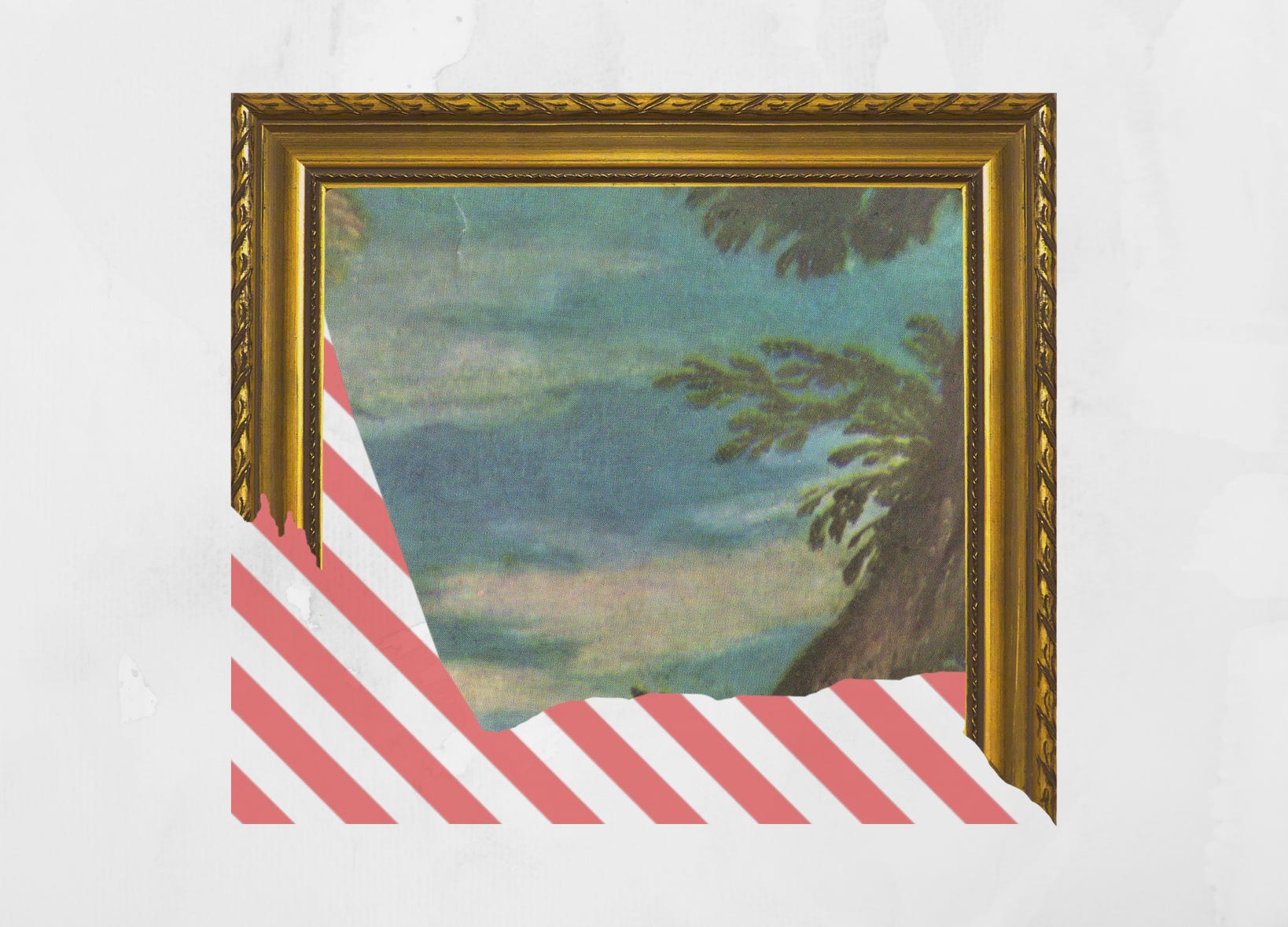
As tourists gawk at Tulips, it is impossible to ignore its current state. Most of the frame is missing, as is most of the canvas. In fact, all that remains is the upper third of the painting, the very top of its eponymous tulips. The canvas is sooted, the fringes of the surviving fragments marred by the cracking of boiling, then carbonized paint.
And yet, here it stands, 126 years after bombs and fires very nearly brought about its demise.
In the immediate aftermath of the Milito, the salvaging of valuable art was not a top priority for the various struggling settlements that emerged. Scavengers in Nova Espero and Puerto Ostra prioritized food and medicine, while vagabond warlords and wandering nomads lacked the capacity to carry such luxuries with them even if they wanted to.
But once some of the more established settlements got underway, specialization in scavenging began to evolve. Around 3 PM, the second unit of Nova Espero’s Archival Unit was founded, responsible for retrieving “artworks and items of significant cultural import.” This included everything from historical artifacts, to old paintings, to sculptures. Art historians estimate that upwards of 95% of all art ever created had been destroyed even prior to the Milito; the Milito itself exacerbated this condition, with historians now estimating that upwards of 99% of all art created pre-Milito is now lost. It was the responsibility of this new “Arts Unit” – officially, Platoon 404 of the 4th Scavenger’s Company – to track down and recover that remaining 1%.
Even so, the Arts Unit went about its work. Bronzes were among the most resilient works of art which, despite sustaining damage from falling structures, remained largely intact. Anything made out of steel or iron faced corrosion from leaking roofs. The Arts Unit often found marble statues pulverized from falling stone walls, and limestone works pitted by exposure to acid rains. The cheap, martial statuary of the more recent propaganda campaigns of Emperor Francisco II were almost all mangled and warped, their hollow bodies incapable of withstanding the heat of the firestorms.
Paintings could be in varying states of disrepair based on their storage. The Arts Unit celebrated the discovery of a remarkably well-preserved body of works from the renowned pre-Milito artist George Cooper stored in the wine cellar of an aristocrat’s mansion on the Hegeliopolis Palisades. Kept in what amounted to a stone vault bomb shelter, the paintings were protected from the worst effects of moisture and fire, the two primary enemies of the painted image.
Elsewhere, the stories were more grim. Some museums were burnt out completely by the firestorms, their works a total and tragic loss. Others sustained significant structural damages, which led to leaks, which then brought mildew and mold that ate away at the paintings left hanging. Surface-level faults that once kept paintings safe in climate-controlled perpetuity became tombs for these works as the roofs caved in and they began to suffer all the same.
Once recovered, most of these works were stored or displayed as-is – even with the professional expertise of a pre-Milito conservator, the Arts Unit lacked the capacity to repair the incalculable damage. True conservation work wouldn’t come until the arrival of Charlotte Dore much later.
A well-respected and well-trained art conservator prior to the Milito, Charlotte Dore found herself stranded in Pierron at the time of the Milito. As a little girl, she had seen Twenty or So Tulips in the Valez Museum, and dreamed that she too, despite challenges faced by Lacaise (and particularly Lacaise women) in the world of art, would one day be a great artist just like her hero Francoise Lavalier.
After graduating from grade school, Dore continued on to the Ecole de beaux-arts de Pierron, and then later the Valez Museum’s vaunted Imperial Art Institute. There, she found a passion for art conservation. Her conservation professor showed his students various paintings and challenged them to figure out which among them had been restored, and which had been retained in their original state. Though Dore had an eye for identifying which indeed had been restored, she came away from the course impressed with the practice. Her particular eye for these telltale signs meant that she would be better at avoiding them. She soon graduated with distinction, called by one of her classmates, “a true marvel of the field of conservation.”
Despite receiving offers from a number of prestigious imperial institutions, Dore returned to Pierron to become principal conservator at the Pierron Museum of Fine Arts. Her natural talents and her organizational skill eventually led to her being the Head of Conservation at the PMFA by the time of the Milito.
Only 37 at the time of the War, Dore spent the next several years struggling alongside her fellow Pierronaise. Under the Communalist government that attempted to restore order in Terre de Lac, Dore became a principal art official for the new regime. The government put her skills to use as a propaganda artist. Though she later said that this work was, “soul-sucking,” she also contended that it allowed her to conserve art that would otherwise have been lost. Terre de Lac was among the first places to truly engage in art conservation following the Milito, and Dore is credited with salvaging countless works of art – and much of Francoise Lavalier’s work specifically – by her own hand, and through the hands of her hired assistants. By the time the Communalist regime collapsed and Terre de Lac was absorbed by the Federation in 27 PM, she had a staff of five assistants and the six of them combined had managed to save thousands of pieces of art that had been ripped, torn, molded, and burned.
After the collapse of the Lacaise regime, Dore found herself out of work as the cash-strapped commonwealth governments of the region cut back on arts programming. Her reputation as a regime propagandist also left her a controversial figure – it was only through the direct intervention of left-wing President Viktoria Kaplo that Dore was appointed Deputy Chief of Conservation at the newly-opened Federal Art Institute in Puerto Blanco. With the subsequent death of her superior in 29 PM, she soon became the Chief Conservator.
Dore oversaw the conservation of thousands more pieces of art, including many that were found badly damaged in the institute itself, or weather-worn in rural noble estates or other wine cellars in the Ferrian backcountry.
For many pieces, Dore chose to restore the work in its entirety. Canvas would be delicately cut and sewn to fit the pieces that had either burned, torn, or rotted off. Then, she and her expert team would use pre-Milito art textbooks and oversized reproductions to mimic the lost designs. Though this process was controversial – many thought that this was an abrogation of the artists’ original work, or that this work somehow covered up the true disaster of the Milito, Dore was nonplussed. “If they want a museum of half-burnt frames and five-year old paintings, then by all means,” she once told a reporter when asked to respond to her critics. “But I believe that children should be able to see the great works – they have memorial museums and classrooms to learn about the horrors of the War.”
Nevertheless, Dore did believe in the specific non-restoration of art if it served a historical purpose. The melted, mangled remains of Francisco II-era propaganda statues, for example, were left largely untouched as “symbols of Francisco’s fire eating its young,” per Dore. Others, like burned family portraits, were left to remind viewers of the human toll of War, and the mildewy remains of Henry Kasperak’s Moonlight Over the Pravo were left to show nature’s quick reconquest of man’s creation in the wake of the Milito.
One piece, however, was both notable and left unpreserved – Twenty or So Tulips. The piece’s incinerated state made it a difficult work to restore without essentially replacing more than half of the work itself. But secondly, Dore felt it was not her place to restore the work. “It feels perverted to even touch a Lavalier,” she told one assistant. Despite her statements to the press and rebukes of critics, Dore thought the work necessary to restore the work would subsume the work itself. Instead, Dore left Tulips unaltered, aside from some minor work to ensure that it did not deteriorate further.
Dore, who typically outsourced the writing of placards to Institute staff upon the completion of a conservation project, wrote Twenty or So Tulips’ description herself. It reads:
“Created by Francoise Lavalier, oil on canvas, 189 BM. Partially – though not completely – destroyed as a result of the Milito.”
Dore remained elusive when asked about the meaning behind her description. Some interpreted it as symbolizing the survival of culture despite everything. Others said that it meant that not even the great cultural artifacts of any age could withstand the totalizing destruction of something like the Milito.
Not that reporters got many chances to ask her about it. Two weeks after she wrote the copy for the placard, Charlotte Dore died in a train accident in Puerto Blanco at the age of 69.
It’s strange that Charlotte Dore’s primary legacy is this gallery of half-destroyed art. It’s estimated that over the course of her post-Milito career, Dore herself preserved thousands of works of art, and trained hundreds more who would go on to lead the art conservation field. Even so, the one work with which she is most closely associated is a piece she barely touched.
At the center of the Charlotte Dore Gallery of Unrestored Art sit two pieces. One is Twenty or So Tulips. The other is a vase – a traditional Lacaise ceramic painted with an elegant, floral white and blue pattern. Previously shattered, the vase was carefully rebuilt using the Ylrikian method of kintsugi, in which gold-dusted lacquer is used to mend ceramic shards.
The vase contains the ashes of Charlotte Dore, who now sits eternally opposite from her beloved tulips.