


This is part of a series centered on Pavel Tzarkowski’s experiences as a survivor in early Nova Espero entitled “1850-01.” Follow this link to go to the series’ page.
As Pavel prepared for his inaugural scavenging mission, Elizabeta readied herself for her first day of work. Smoothing out the too-big button-up and jeans she had received at the Survivors Hospital, she walked down the hall to the shared bathroom. Elizabeta had gotten back into the habit of checking and re-checking her appearance, something she had ignored for much of the Collapse era. If you’re thinking about where your next meal is going to come from, do you really have the time to care if the person standing opposite of you didn’t lint-roll their trousers?
When she was a child, Elizabeta’s mother always gave her grief about her frequently unkempt appearance. Were it not for the strict dress code of her parish school, Elizabeta would have let her thick, rust-colored hair remain in its natural state with stiff shoots springing in every direction. To her, being well-groomed had nothing to do with her academic performance.
“You care so much about school,” the dour Ferrian would say. “But no man is going to marry you if you look like that. What use will your diploma be when you’re a lonely spinster?”
Spinster. What a delightfully upper-crust term for a woman who had barely made it out of the third grade and married a man who drank his wages away at the tavern around the corner. How easy it is to think in those terms when your own situation is so hopeless.
Elizabeta eyed herself in the chipped mirror as she had been trained to do. She instinctively noted her cheeks filling in after being so hollow for so long. Compared to life in the wasteland, Elizabeta had been feasting the last few weeks, consuming a wide variety of admittedly inventive spins on potatoes, the bedrock of novo cuisine. She thought of her mother, caught between the impulse of the Ferrian tradition of stuffing one’s offspring with heavy and limitless food, and the glossy fashion magazines of the imperial capital. With one hand she’d serve a heaping bowl of camarón y arroz, and use the other to point out how girthy her arms had gotten. God only knows what comment she’d make about Elizabeta’s returning figure, as paltry as it was.
Elizabeta missed her.
After her thorough self-examination, she accompanied Pavel and Filip to breakfast. Though she wasn’t the most privy to small-talk, she found the residents here fascinating. It turns out there are topics of conversation other than preservation methods for rat meat when your basic needs are met. To her right sat a young Vetludese couple, Maria and Fabio. They had traveled all the way from their marshy homeland, some eighteen-hundred miles to the north. Nova Espero, at the very end of the very southern tip of the continent, had been a final hope for them; every other settlement had either been a mirage or had already collapsed by the time they reached it or was run by a psychotic despot.
“It feels sdolcinato1, but here at the edge of the world we found peace,” she says. “Gah… I feel like I’m in a cult when I say things like that,” she follows up with a laugh. Elizabeta hadn’t liked the people she sat around campfires and shared rotten beans with in the past. They were all the toxic combination of unknown strangers in a hostile environment and people who very well could just die the day after you met them. Talking to Maria, Elizabeta could feel that familiar twinge of liking someone she just met. Not pre-emptively mourning their loss or planning out how best to take them out if they tried to steal supplies, but relishing in their laughter and finding them intriguing rather than suspicious.
After breakfast, Pavel kissed her and Filip goodbye. The cold that came in as he opened the door hit her especially hard. She had confidence in Pavel not to get himself killed, but she still despised it every time they were apart.
She escorted Filip to what was purported to be a daycare for the residents of the Gluesenkamp Family Barracks. A twenty-something with thick wavy black hair and even thicker eyebrows greeted her at the door. Martine had been a schoolteacher in a Lacaise neighborhood before the War, and going off of the children’s quiet, polite playing behind her, Elizabeta could surmise she was a fairly decent one.
“Bonjour Filip! Welcome, go on in and I’ll introduce you to the others,” Martine said, patting him on the head.
“What do you all do during the day?” Elizabeta asked. Not even the apocalypse could prevent her from being curious about her child’s education.
“Basic reading, arithmetic… the kids are all different ages, so it’s sometimes hard to find activities for them all to enjoy,” replied Martine. “Lots of them haven’t played with other kids for quite some time, so we’ve found that just being around each other has its own benefits.”
Despite the evident lack of formal curriculum, Elizabeta couldn’t help but agree. Though Filip never complained, she could tell that having only her, Pavel, and Anna to interact with bored him. Already, Elizabeta could see him excitedly approaching a group of kids drawing on old construction paper.
Elizabeta recalled the directions the Survivors Hospital had given her for her work assignment. Go down Renzi to the corner where you see City Hall, then turn left. You can’t miss the co-op.
Flurries had become billows of snow by the time Elizabeta left the Barracks. The streets were largely vacant, almost everyone already at work. Her only company were laborers across the street whose heavy breaths clouded the air as they gingerly hoisted a set of solar panels onto a rooftop.
Elizabeta looked around to the nearby rooftops, and noticed a pattern. Each bore an array of the darkened rectangles, likely salvaged from the countless homes and businesses that used them throughout the imperial capital. Solar panels – originally invented to power anti-missile satellite systems – had become ubiquitous in Hegeliopolis as the city’s electrical system continued to crumble when the Empire neglected infrastructure for the sake of military spending.
Taking a left onto Park Street, Elizabeta found her eyes magnetically focusing on what had to be her destination. Officially the Nova Espero Electric Cooperative, “the co-op” was a massive brick structure with a brightly lit sign hung over the doorway. A string of pickup trucks sat outside, charging cables filtering under a garage door leading into the building.
Stepping inside, the lobby smelled of stale preserved coffee and even staler cigarettes. No one sat behind the front desk, but Elizabeta could hear old standards blaring from the office just beyond an adjacent doorway. Making her way through the threshold, she saw a team ogling a map of the neighborhood.
“The buildings on Carrick are too tall, they’d block the sunlight if we put them on Morgan,” said one of the workers, a squat, dark-haired woman in her thirties with thick-rimmed glasses held together by duct tape.
“Okay… then maybe we can put them on the Carrick side,” replied a pale, balding man with a valiant chestnut brown combover and a dutifully ashed cigarette dangling from his mouth. “A lot of those buildings were owned by Venturo Capital, and we just found a bunch of their master keys. We should be able to get on the roofs.”
“She’s here,” said another, a pale, freckly woman in her mid-twenties wearing wiry glasses. The three turned in Elizabeta’s direction, breaking their focus.
The man introduced himself first. “Ah, you must be Dr. Tzarkowski. I’m George Andrews, the head of the co-operative-”
“It’s a co-op, George,” said the one in the wiry glasses. “No one’s the head.”
“Fine,” he corrected himself. “I’m the manager at the co-operative. The pedant here is Alice, she is our principal planner.”
He motioned to the other side of the table. The woman with the thick-rimmed glasses, already back to her work, introduced herself. “Oh! I’m Leah, the secondary planner.”
“We have a few dozen more workers here, but they’re all out sweeping the panels or hanging new ones. Alice, give Dr. Tzarkowski the tour.”
“Not my boss,” she replied curtly.
“Alice, could you please give Dr. Tzarkowski the tour,” he sneered.
“Absolutely,” she replied, motioning Elizabeta over.
Exiting the small, wood paneled front office, Alice brought Elizabeta to a room with dozens of batteries salvaged from every possible location – hospitals, old cars, and even from an old train forever moored at the ruined Imperial Station. “We had to build a frickin’ crane to get that one out,” she said, motioning to the several-ton behemoth. Salvaged copper wire sat in neatly arranged piles nearby, alongside recovered transformers from demolished utility poles. All of these were accompanied by cardboard binders, indicating the current quantity, origin, and planned destination for each component.
Despite being a head shorter than Elizabeta, Alice gave off an air of authority and confidence that both put her at edge and at ease. She seemed at once competent and dangerous, with an authoritative knowledge of the settlement’s electrical infrastructure that came with either being involved in such a system for decades or building it from the ground up. Given the circumstances, it had obviously been the latter.
“Almost every single building in the City is electrified in some way. They may only have lights, but they do have power,” she told Elizabeta, giving the contextual spiel. “Right now, basically none of the buildings are connected to any sort of grid. That means that if they have a panel on the roof, that panel sends a charge to the battery in the basement.”
“But if the panel is covered by snow, or the battery malfunctions…”
“No power, no lights,” finished Elizabeta.
“Exactly,” Alice replied. “For the apartments or offices that’s not the biggest deal. It’ll be dark. Whatever. But when it’s the hospital… things can get a little hinky. They have backup batteries and a massive array to feed them, obviously, but you can only cram so many batteries into basements and hallways before it becomes a hazard.”
“So that’s where you come in,” Alice continued, bringing Elizabeta over to the hanging mezzanine office in the back corner of the warehouse. Unlocking the door revealed a well-kept office space, with shelves full of electrical infrastructure texts alongside plant and grid schematics.
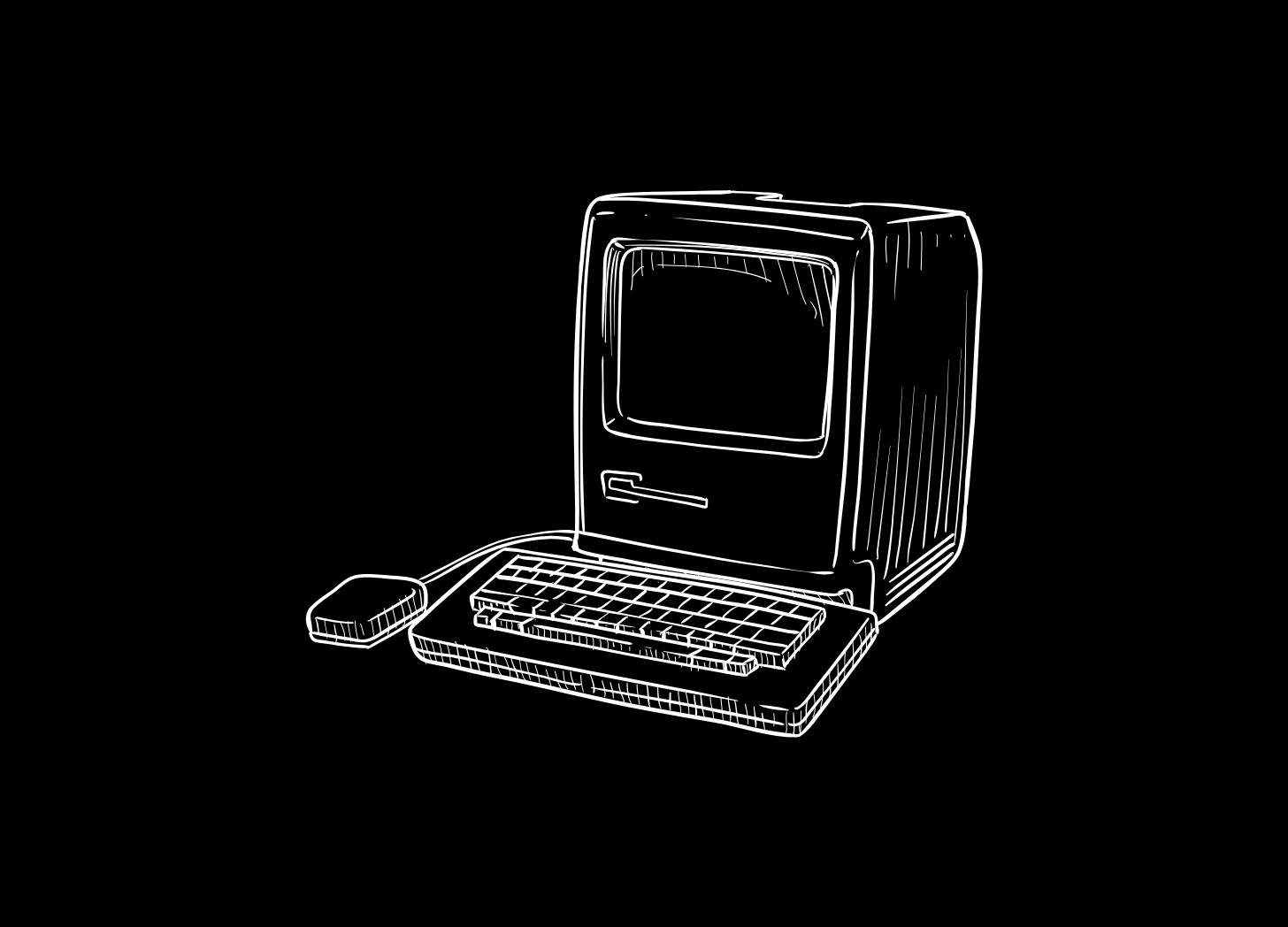
The real centerpiece of the office, however, took up the back corner adjacent to a window overlooking a perpendicular alleyway. There, sitting on a simple birch desk was a monument to an earlier age. Gleaming in its cheap brown and gray plastic casing, its green and black screen shimmering, the Tawiponapska 64 greeted Elizabeta with its cathode ray tube smile. Computer terminals had been a new form of technology prior to the War, but Elizabeta the electrical and chip engineer was well-acquainted. She beamed with excitement when her department accidentally overpurchased a set four years ago, and she was able to get away with taking one home. She had missed the whir of the hard drive, and that distinct, staticky hiss that came when you turned the thing off for the night.
The startup screen, glowing in its effervescent green glory, simply read:
VAN AUYK ENERGIEBIDRIJF
GEBRUIKERSNAAM:
WACHTWOORD:
“So, apparently the company that owned the terminal was in the Centraal,” Alice told her. “We haven’t figured out how to change the language settings yet, or if there’s even a way to do it.” Pointing to an adjacent Centraalish to Hegelionic dictionary, she explained they’d been able to navigate through the menus and software using it, but it had been a tedious process. Alice directed her to a sheet tacked to the corkboard above the computer, with a basic rundown of commonly used terms and their Hegelionic translations.
“Essentially what we need to do is design a grid, and map it out. Pencil and paper is fine for rough drafts, but this computer has the software to create and run grid models…”
“EnergyMap?” Elizabeta interrupted.
“Oh thank God, you know the name,” Alice replied. “From what I know, it’s the same software just in Centraalish. Hopefully most of it is muscle memory for you.”
Elizabeta sat in the creaky, aging office chair and cautiously approached the machine. Typing in the user information hastily written on an index card and unceremoniously taped to the monitor, the list of options appeared. Alice showed her the notebooks containing battery, panel, and transformer quantities, efficiency notes, and potential grid maps. All she needed to do was model the grids and see if anything would explode.
Alice wished her luck, and began to retreat out the door.
“It’s nice to finally meet you,” she said. “George was really excited when you got assigned.”
“Thanks, Alice,” Elizabeta replied. The pleasantries of office onboarding. What another strange rediscovery.
After her first day at work, Elizabeta exchanged farewells with the other “worker-members” of the Nova Espero Electric Cooperative. Despite being mid-afternoon, the air was still frigid. The snow had stopped, but the streets remained covered in a thick pallid swamp of brown-gray slush. Before heading home, Elizabeta headed over to the General Hospital just a few blocks away.
Despite being likely the largest settlement in the post-War world, Nova Espero was still at its core a small town. The Aid Corps officers running the front desk had learned Elizabeta and Pavel’s names over the past few days, and greeted her warmly as she stepped in from the cold. Donning the paper mask handed to her by the officers, Elizabeta made her way up to the children’s sanatorium “wing” – really just a set of two adjoined meeting rooms on the second floor. Inside were ten or so beds, eight of which held a child or at least evidence that one had slept there recently. Some of the children in better condition, including Anna, were playing in a small area filled with toys, puzzles, and games. She felt a twang of pain as her eyes trained over to the two ailing in their beds.
“Mommy!” Anna shouted, as she bolted over to Elizabeta. Were it not for her occasional hacking cough, Elizabeta wouldn’t have known she was even sick. Anna was still the same, 6-year-old bundle of energy she had always been.
“Look at what I made!” Anna yelped, pulling a piece of paper from her bedside table. It was a drawing of her, Elizabeta, Filip, and Pavel entering the city gates. “It’s all of us… we’re safe now!”
Suddenly, an Aid Corps officer entered the room. “Time for medicine!” he said with the tone of a teacher telling their students it was time to come in from recess. Each of the children tumbled into their cots, as a number of other officers prepared needles. Elizabeta watched as, one by one, the children were administered their antibiotics. She could barely help from crying when they got to Anna, and gave her what was almost assuredly a placebo. Apparently, she didn’t hide it particularly well. Because the masks covered most of the face, one’s attention was drawn to the wearer’s eyes. And Elizabeta’s eyes were often traitors.
“Are you okay, Mommy?” Anna said.
“Yes hon, I’m okay,” she replied. It wasn’t until after she kissed Anna on the head and exited into the hallway that she released even stifled sobs. There was nothing she could do but wait out the clock. She was rebuilding their infrastructure from scratch with tools only she knew how to use, and Pavel was risking his life in the wastelands of Hegeliopolis. Why was that not enough? Why did their daughter have to pay the price?
Elizabeta wiped away her tears and swallowed her rage. She trudged down the stairs, and shuffled out the General Hospital’s front door. She sent a final glance towards her daughter’s window before making her way back to the family barracks.
It was cold.
This is Part Seven of a series centered on Pavel Tzarkowski’s experiences as a survivor in early Nova Espero entitled “1850-01.” Follow this link to read Part Eight.
Translates to something along the lines of “schmaltzy” or “saccharine.”